Table Evidence
The Excel add-in sends entity-scoped workbook tables into CORE as versioned, reviewed evidence staged for underwriting.
§ Platform - CORE Underwriting
The underwriting workspace is where confirmed spreads, table evidence, scenarios, capital stack, coverage, policy tests, risk themes, waivers, and memo treatment meet in one borrower file.
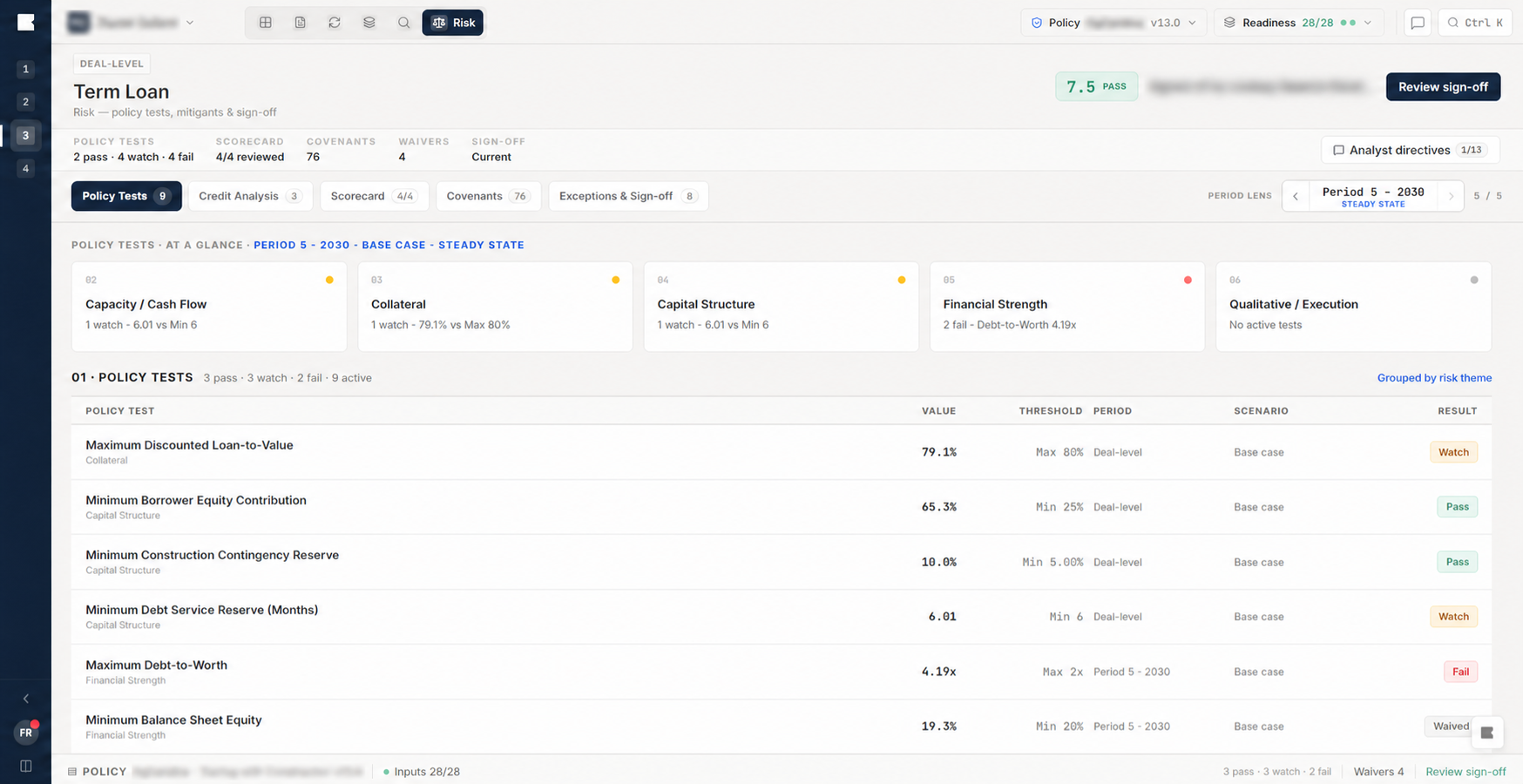
CORE measures the file against the tenant's own credit box: policy tests, coverage periods, scorecard factors, covenant applicability, waivers, compensating factors, and memo treatment. The policy snapshot, inputs, exceptions, and sign-off stay attached to the project history.
Bound policy, coverage, and risk treatment in one file§ Judgment Layer
The Excel add-in sends entity-scoped workbook tables into CORE as versioned, reviewed evidence staged for underwriting.
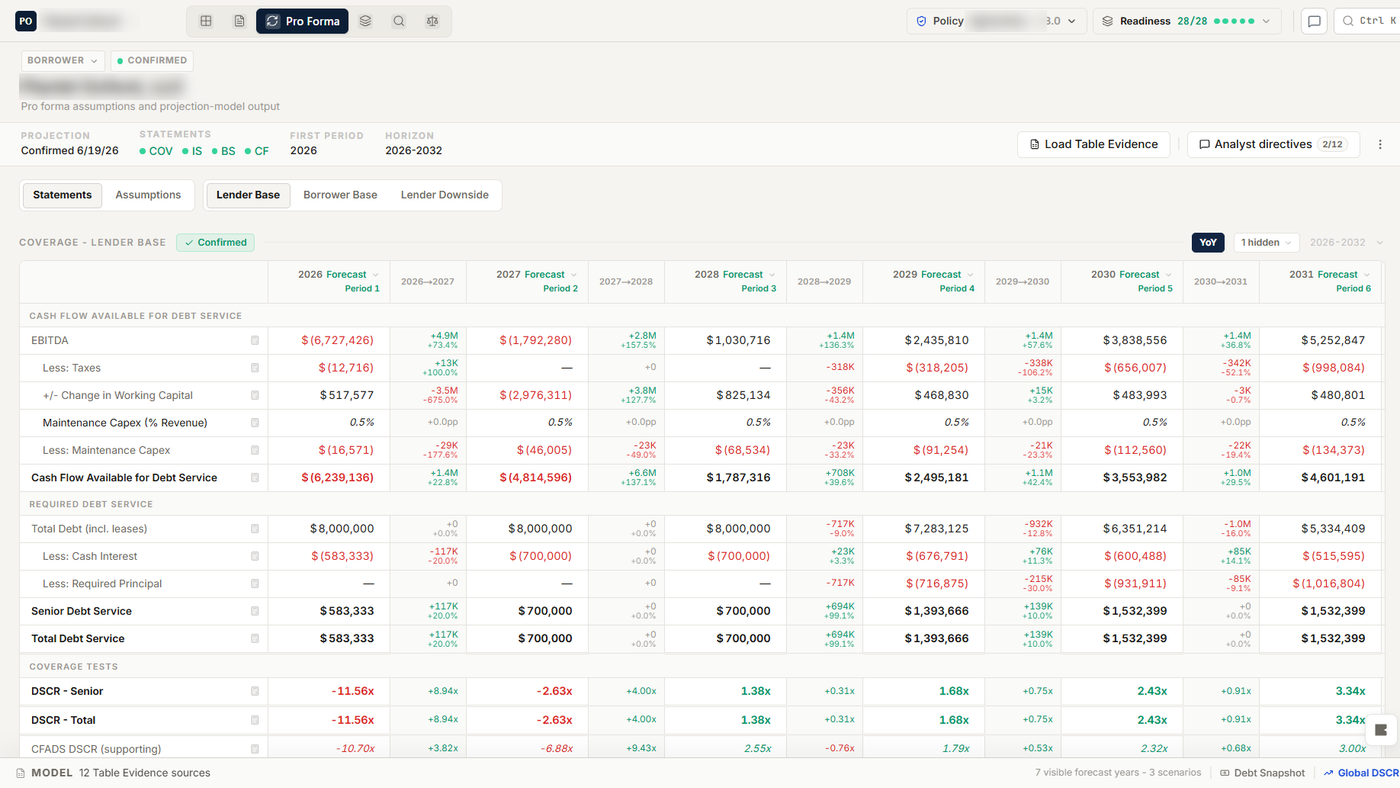
Lender base, borrower base, and downside cases carry assumptions, projections, and sensitivity context without becoming disconnected spreadsheets.
Facilities, guarantee splits, debt service, rate shocks, and sources-and-uses stay inside the underwriting record.
DSCR and related tests are measured by the bound policy and period lens, with source context visible when a number is missing.
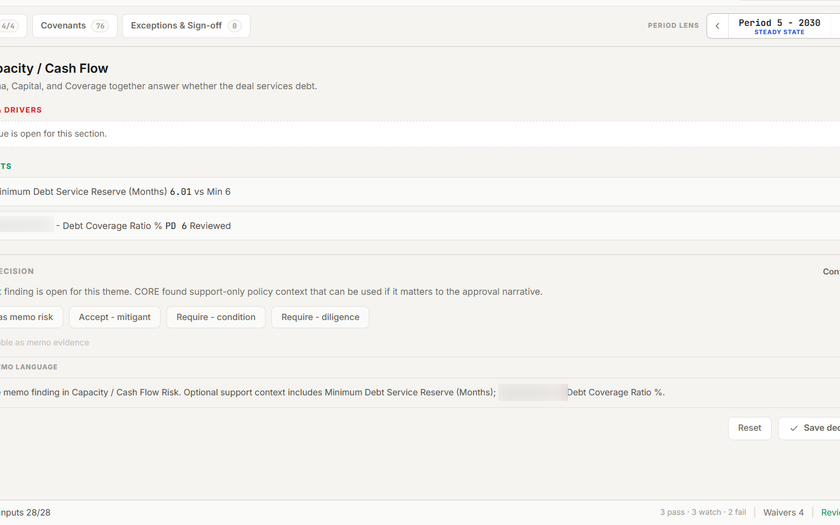
Risk themes become decisions: carry as risk, accept mitigant, require condition, require diligence, or exclude from memo treatment with rationale.
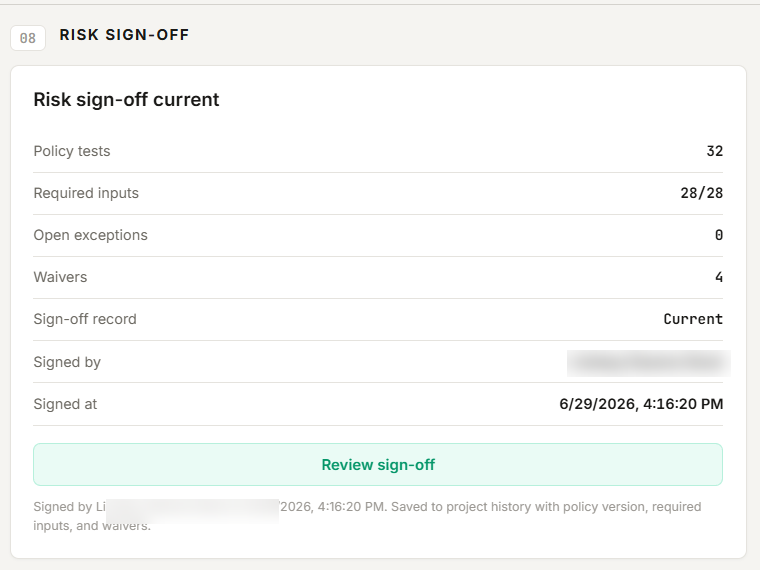
Waivers, compensating factors, scorecard factors, and sign-off are saved with policy version, inputs, and recorded-by history.
§ Underwriting System
CORE turns uploaded documents and analyst workbook captures into governed, source-linked evidence, then carries that evidence through financial analysis, structure, coverage, risk treatment, and memo approval.
Uploads are classified, parsed, and converted into source-linked text and, when appropriate, summaries, key facts, and metadata under analyst-controlled review.
Selected workbook tables are captured inside the analyst's own model, preserving rows, columns, formulas, and source range without a rebuild.
Both paths converge in the governed evidence layer, preserving source trace and review state.
Source documents, derived artifacts, and structured workbook captures retain version, entity, provenance, and review state before downstream use.
analyst confirmation governs downstream use
Historicals for multi-period spreads · Pro Forma for scenarios and assumptions · Capital Stack for facilities, sources, and uses.
confirmed underwriting state three models · one file
Debt service, policy periods, and sensitivities are measured against the structure.
DSCR / FCCR / sensitivity policy-measured
Policy tests, scorecard, covenants, waivers, mitigants, and conditions converge.
tenant credit box waivers with compensating factors
Approved treatment and durable sign-off stay attached to the evidence trail.
signed / snapshotted replayable
Product Proof
The interface is shown selectively: each chapter proves a different judgment job without turning the public site into a complete product manual.
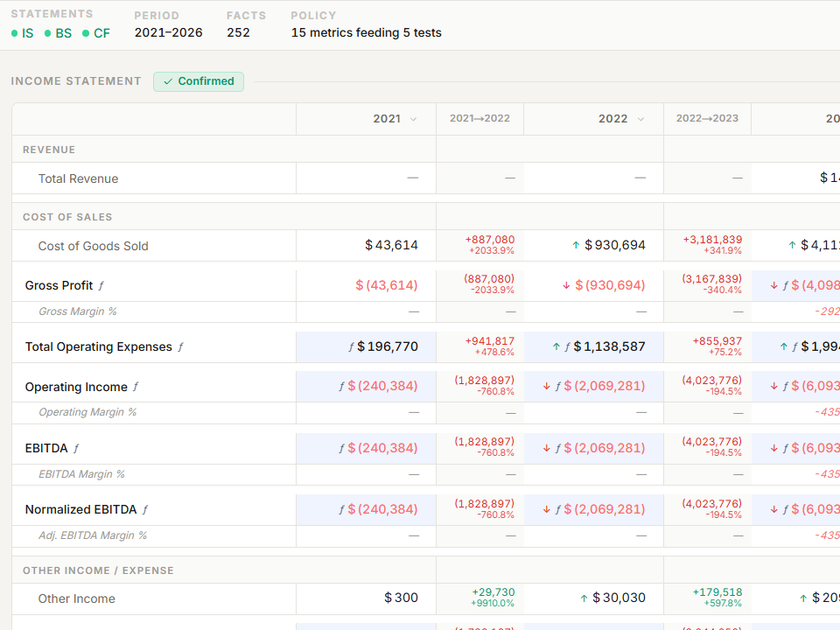
Financial state
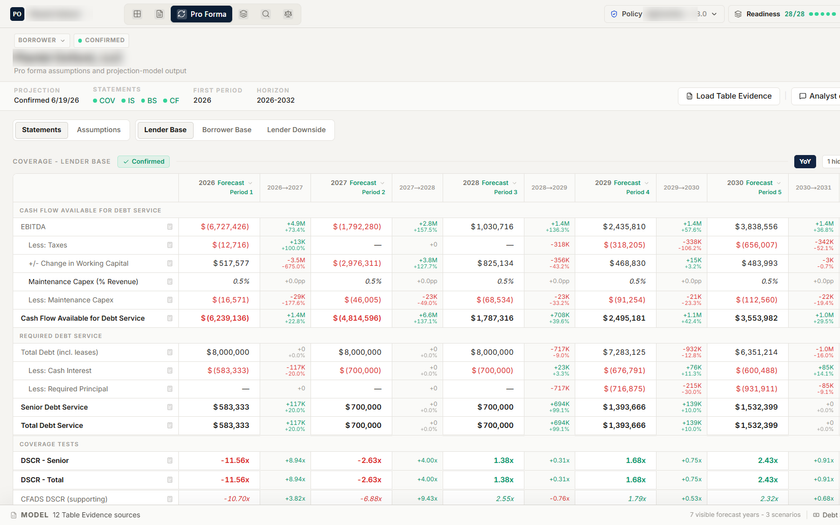
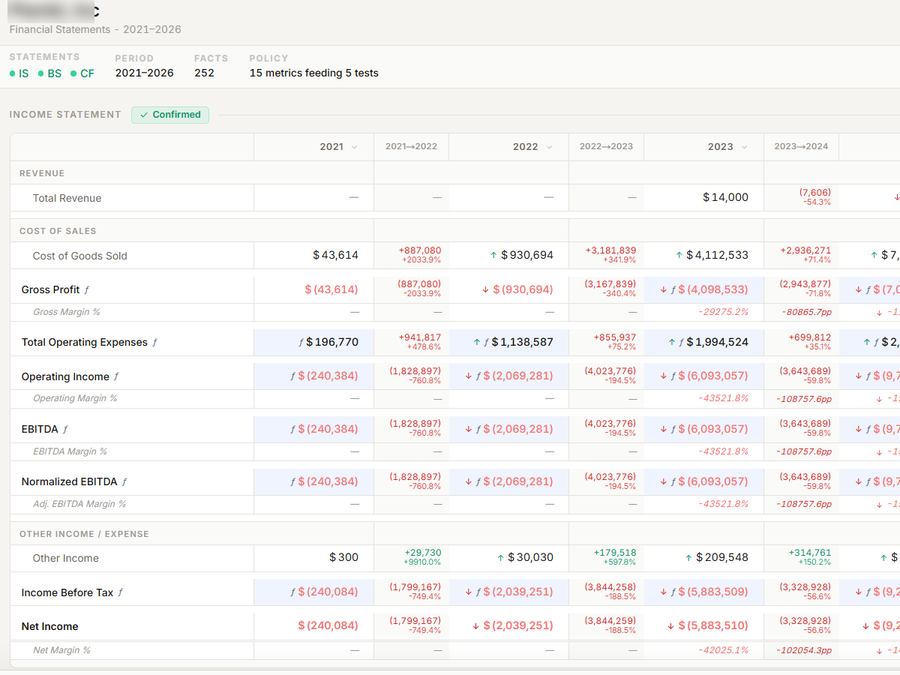
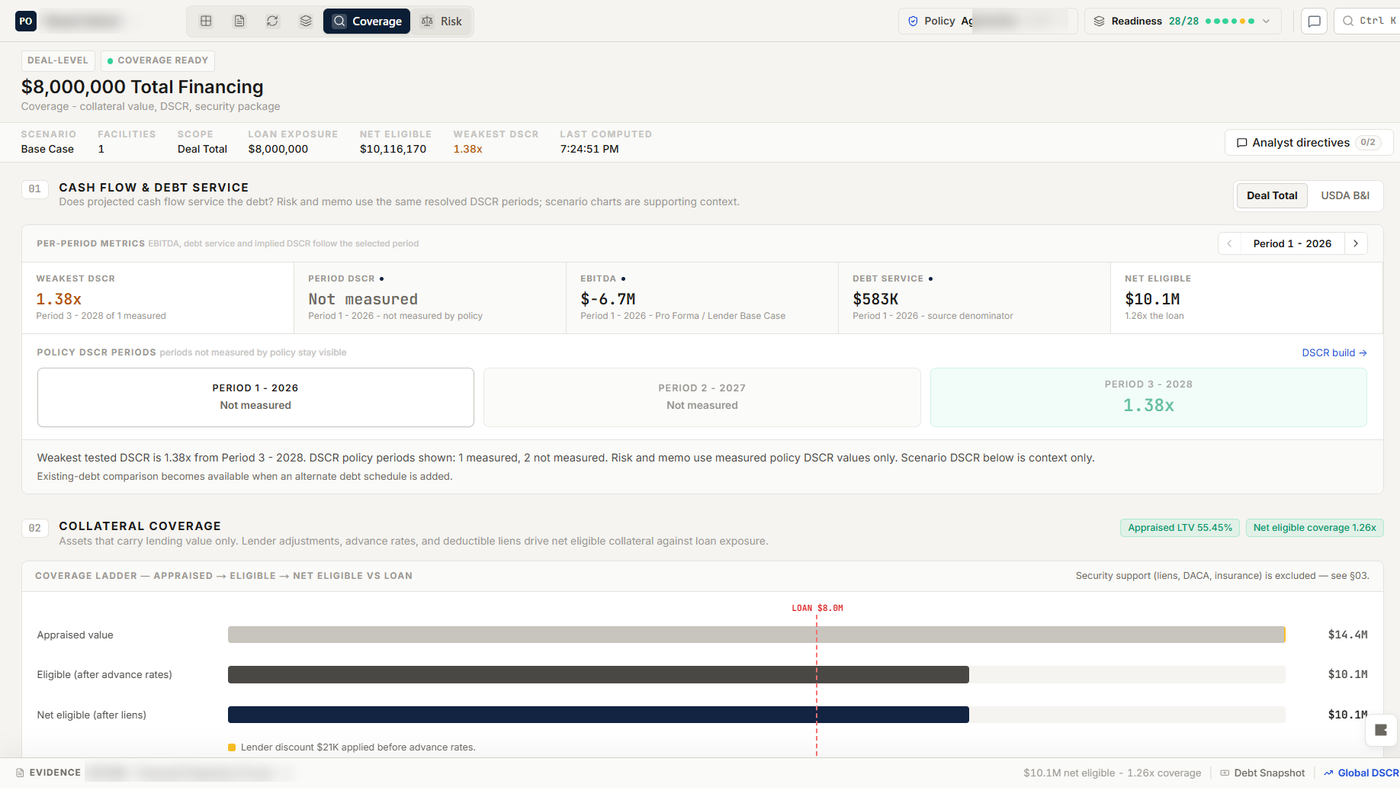
Confirmed historical performance and scenario projections resolve into one model of cash flow, debt service, and coverage.
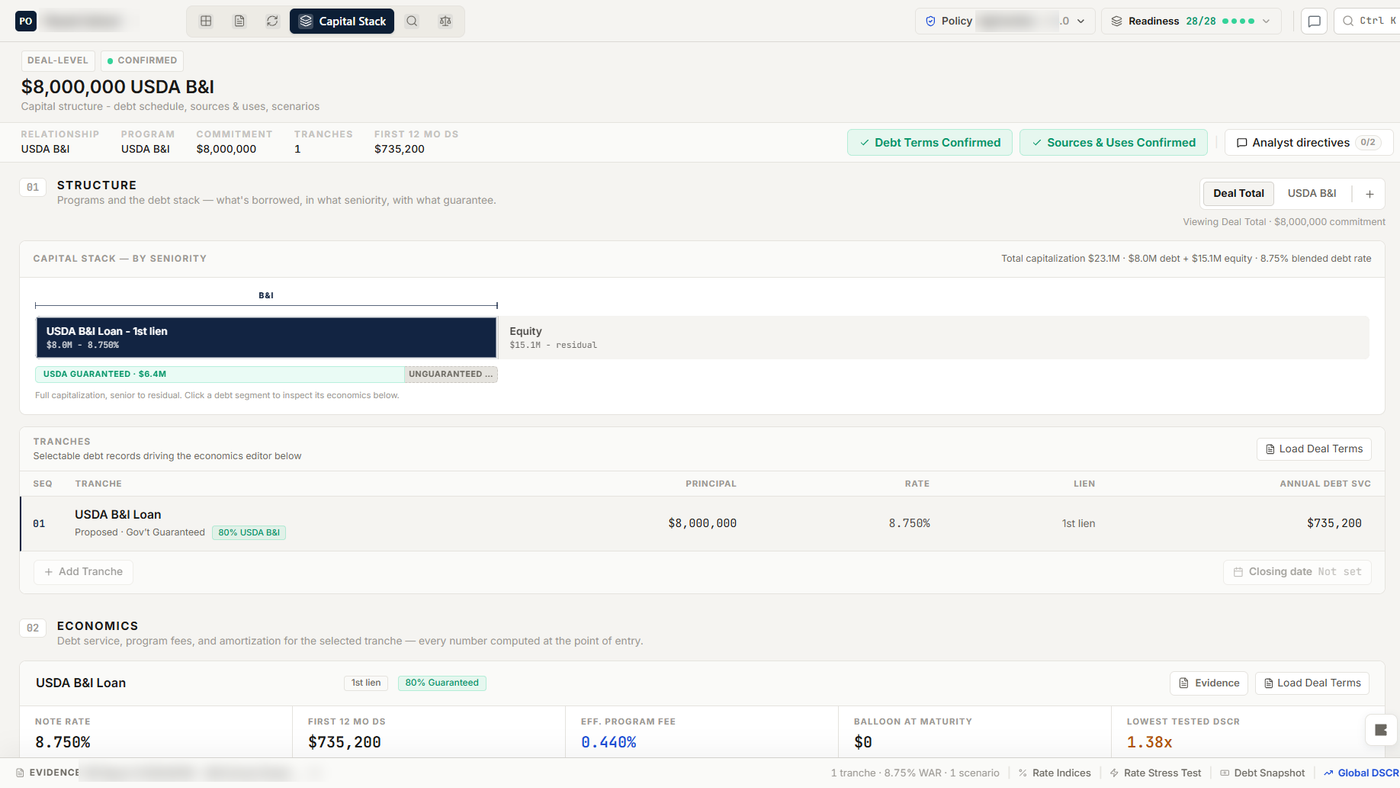
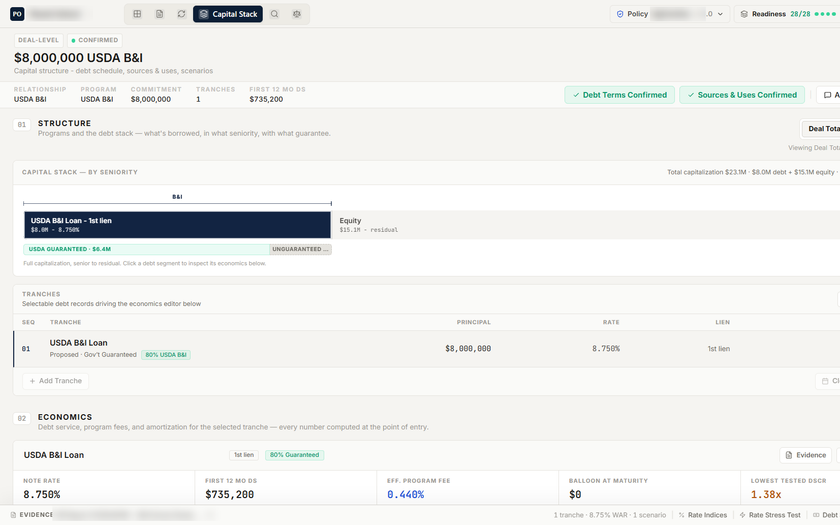
Capital structure
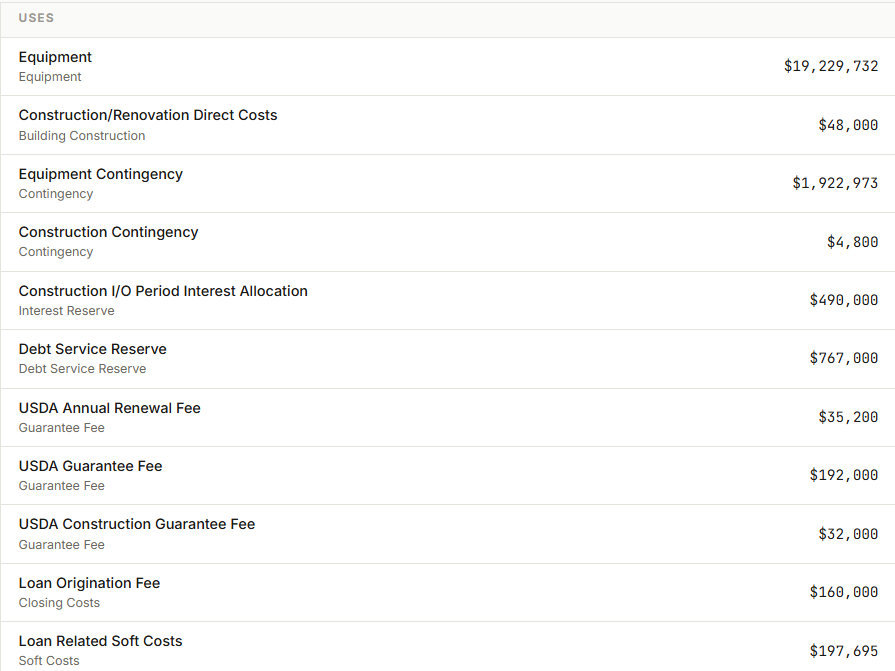
Facility amount, guarantee, seniority, debt service, and balanced sources and uses stay inside the underwriting record.
Coverage and security
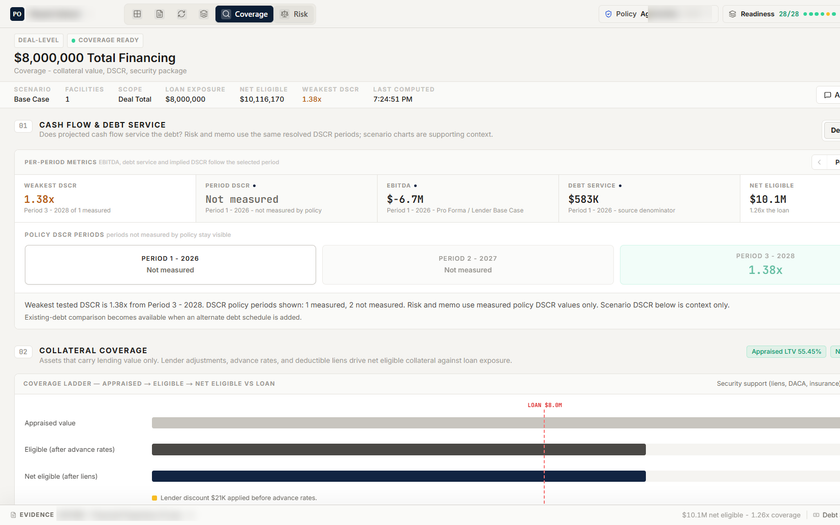
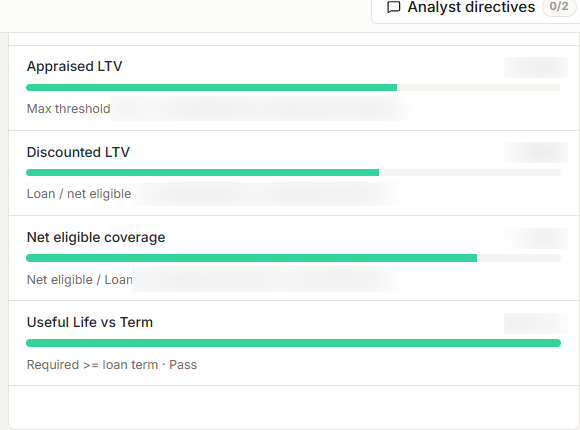
CORE keeps repayment capacity, collateral lending value, and legal perfection connected without collapsing them into one ratio.
Policy to decision
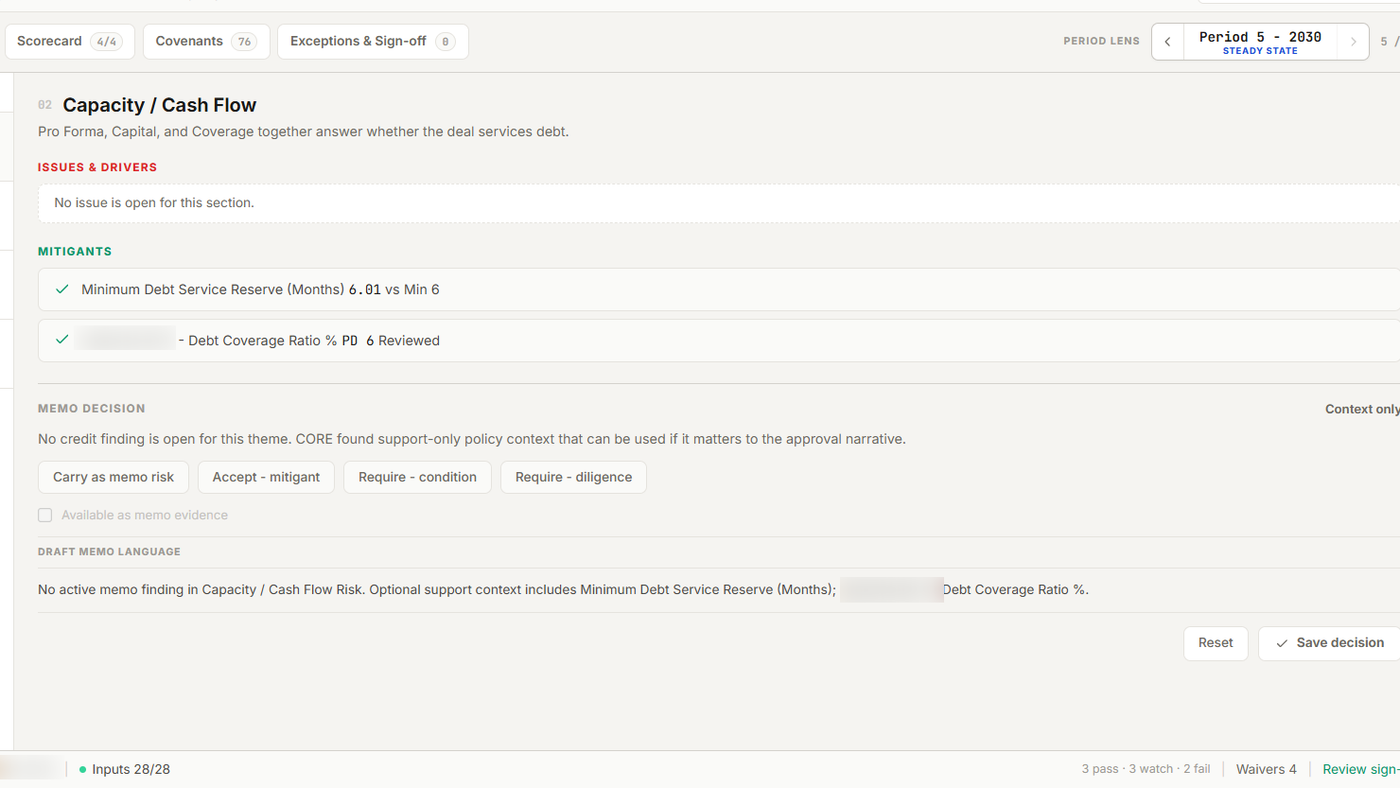
Analysts turn issues and policy context into mitigants, conditions, diligence actions, memo treatment, and recorded sign-off.
§ Fit
CORE keeps the judgment work visible instead of flattening it into a status column.
Workbook-sourced Table Evidence and AppSource Excel add-in path
Historical spreads and confirmed metrics feeding policy
Scenario pro forma and sensitivity context
Guarantee-aware capital stack and debt-service math
Coverage, policy tests, covenant applicability, and scorecard factors
Risk themes that land as memo decisions with waiver/sign-off history
§ Path
Confirmed spreads, projections, and structure establish the metric state that policy tests consume. Source evidence remains attached for review.
The selected program's versioned policy snapshot applies thresholds, scorecard factors, covenant rules, and waiver treatment.
Analysts decide exceptions, mitigants, conditions, and memo treatment against the bound policy.
Memo generation carries forward the approved policy and risk state. It does not silently recalculate or override analyst judgment.
§ In Depth
In a typical stack, the loan origination system knows the deal's stage while the actual underwriting — spreads, projections, coverage math, policy exceptions — lives across workbooks, drafts, and email. When committee or an examiner asks how the decision was reached, someone rebuilds the story by hand.
CORE's workspace holds the analysis itself: confirmed spreads, scenario pro formas, the capital stack, coverage tests, risk themes, waivers, and sign-off, all attached to one borrower file with the evidence trail intact.
Underwriting runs against the lender's own configured policy — thresholds, covenant rules, scorecard factors — applied as a versioned snapshot bound to the deal. The scorecard adopts the tenant's own rating model rather than imposing one: CORE records the lender's values and weights, it does not recreate the model.
Policies can be swapped mid-deal when a lender or capital source changes, with the file re-evaluated against the new snapshot — so "which policy was this decision made under?" always has a literal answer.
Multi-entity borrowers, guarantee-aware capital stacks, lender-base and downside scenarios, and policy-measured coverage periods are the normal case here, not an edge case. That depth is what makes the workspace usable for government-guaranteed programs, private credit committees, and LP diligence alike.
Every risk theme resolves to a recorded decision — carry as risk, accept mitigant, require condition, require diligence — and memo generation drafts from those decisions rather than rediscovering them. Confirmed spreads flow in from the spreading engine with their sources attached.
§ Next Step
We will walk through how CORE keeps policy, projections, risk, waivers, and memo treatment attached to the same borrower file.