Template-defined structure
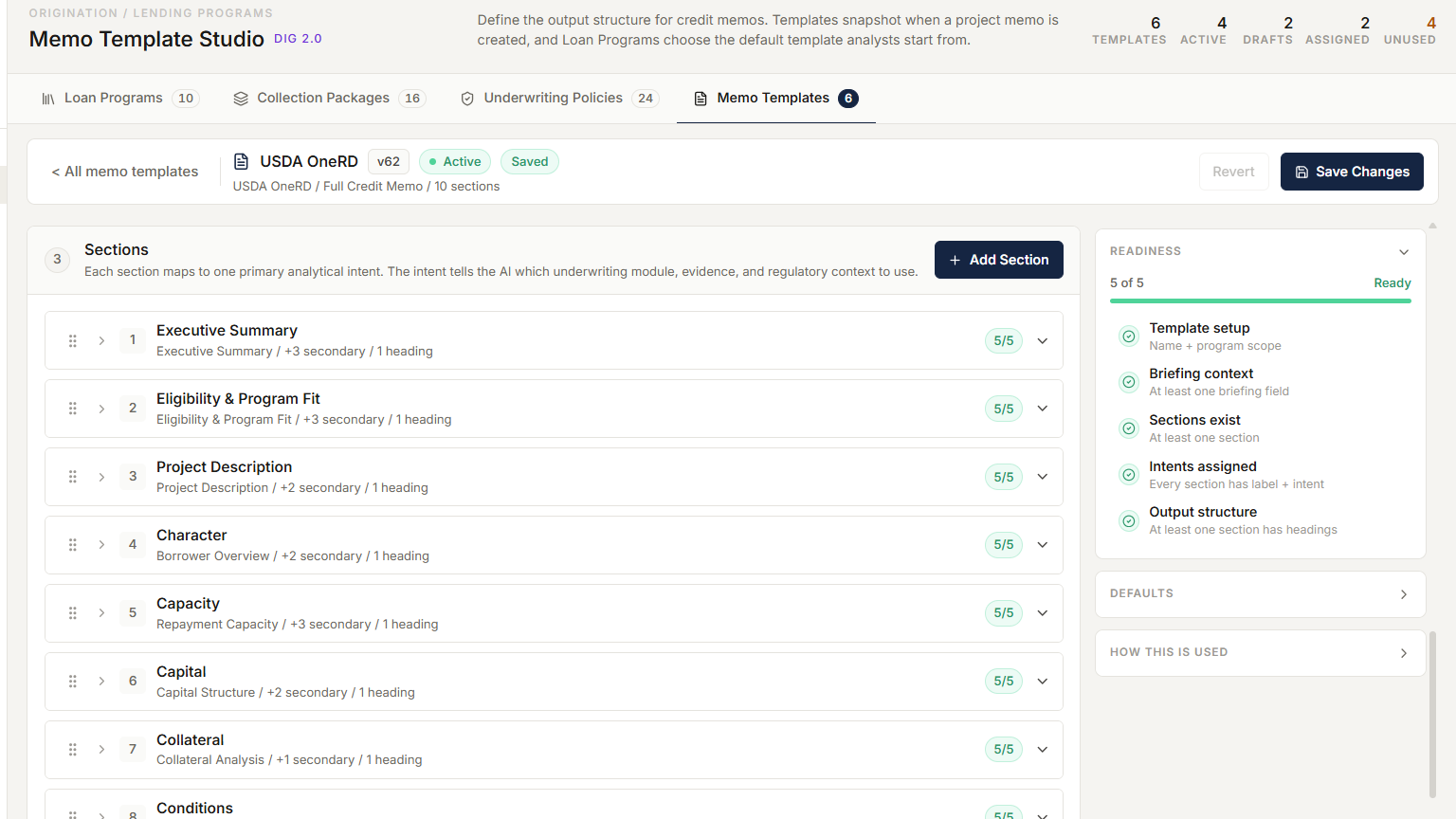
Sections, per-section analytical intents, regulatory domain coverage, and plain-language mandates come from your program's memo template - versioned, and snapshotted when a project memo is created.
§ Platform - CORE Credit Memos
There is no fixed memo. Your program defines its own memo templates - sections, analytical intents, regulatory domain coverage, section mandates, output structure - and CORE routes each section through the right specialist, evidence package, program rules, and review path before it becomes memo language. The model proposes; the analyst accepts, edits, or rejects under cite-or-decline controls.
A repayment section, collateral section, eligibility section, and risk section should not be drafted by the same undifferentiated AI call. CORE assembles the support package at runtime: accepted facts, source files, prior sections, internal credit policy, platform regulatory context, section mandate, and writing standards. The analyst assembles the evidence; the receipt proves what the model saw.
Section -> analyst pair -> policy + regulatory support -> proposal§ Program Controls
Sections, per-section analytical intents, regulatory domain coverage, and plain-language mandates come from your program's memo template - versioned, and snapshotted when a project memo is created.
Every heading in the template is individually locked or flexible. Lock the outline, or let the model expand it - heading by heading, the analyst decides where model judgment is permitted.
Each program can route section work to a specialist analyst and supervisor pattern, so drafting and review follow the credit shop's operating model.
CORE brings the tenant's underwriting program, covenants, thresholds, risk weights, and credit-policy overlay into the section package.
The platform regulatory layer retrieves the dated rule chunks that belong to the section's intent, with citations preserved.
The draft receives evidence, tables, policy context, regulatory context, prior sections, analyst notes, and the section mandate.
The model proposes memo language. The analyst accepts, edits, or rejects it before it becomes the memo record.
Routing, inputs, model, prompt package, output, proposal, and human decision are preserved so the work can be replayed later. Risk evaluates the policy; the memo inherits the result - it cannot recalculate its way around it.
Product Proof
Credit memo proof should show control—not disclose the underlying borrower narrative. Each chapter isolates the institutional job and keeps deal-specific content redacted.
Evidence package
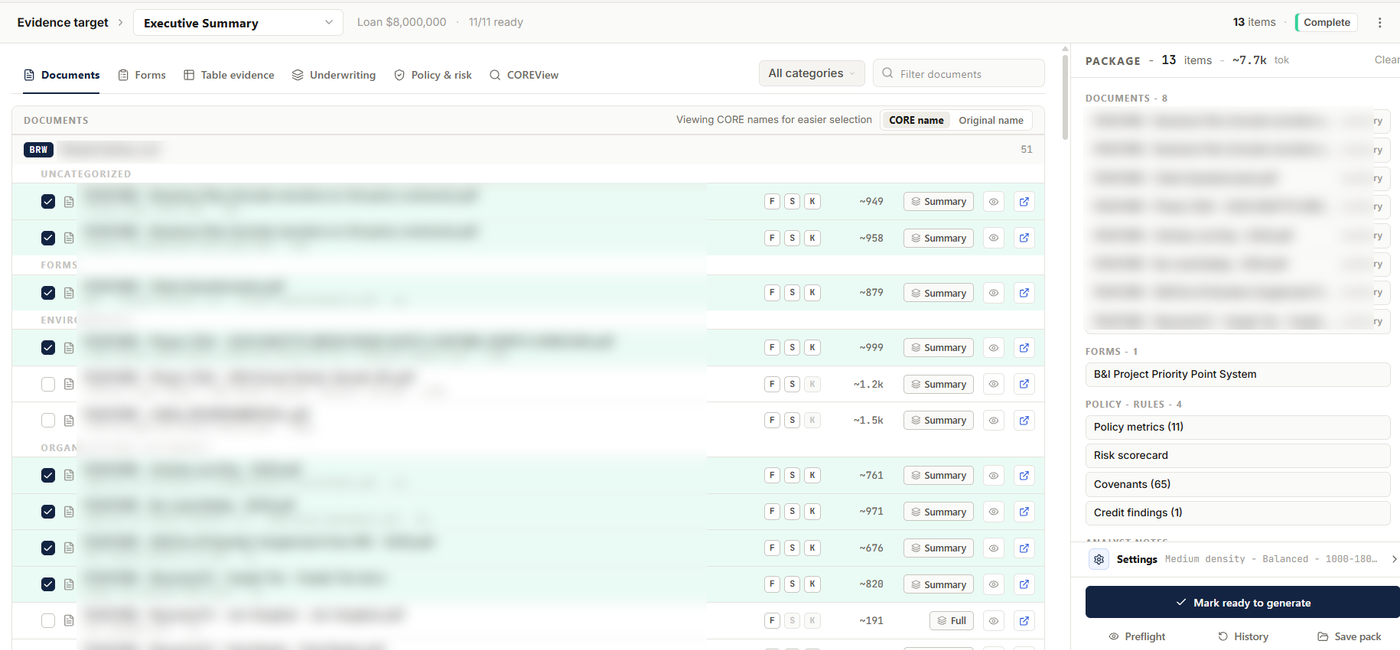
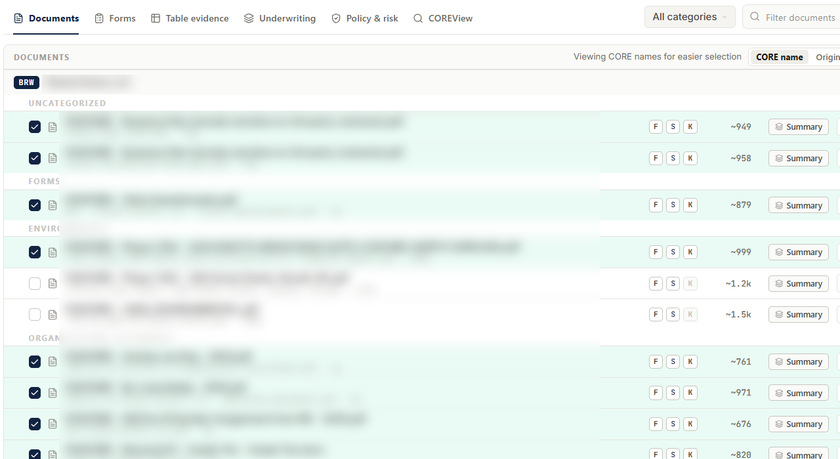
The analyst chooses the documents, representations, forms, tables, policy results, and other evidence that a section may use before generation begins.
Section review
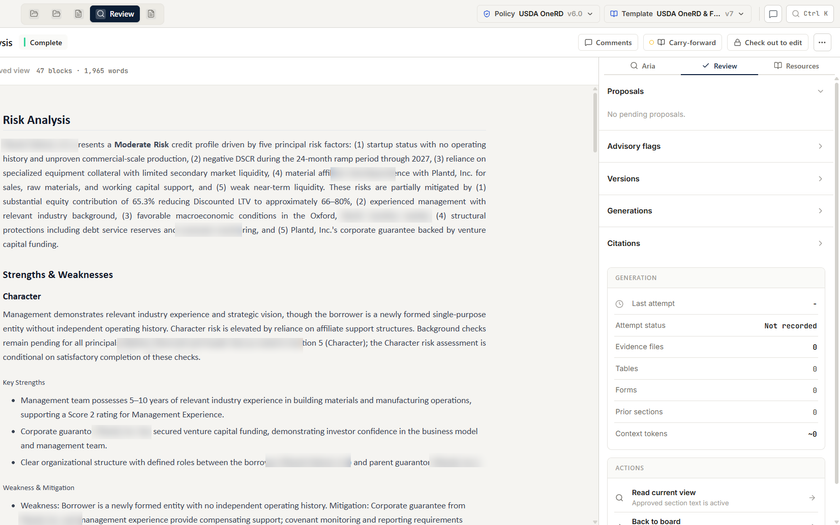
Approved narrative, proposals, advisory flags, versions, generation history, and citations remain together in the review workspace.

Institutional output
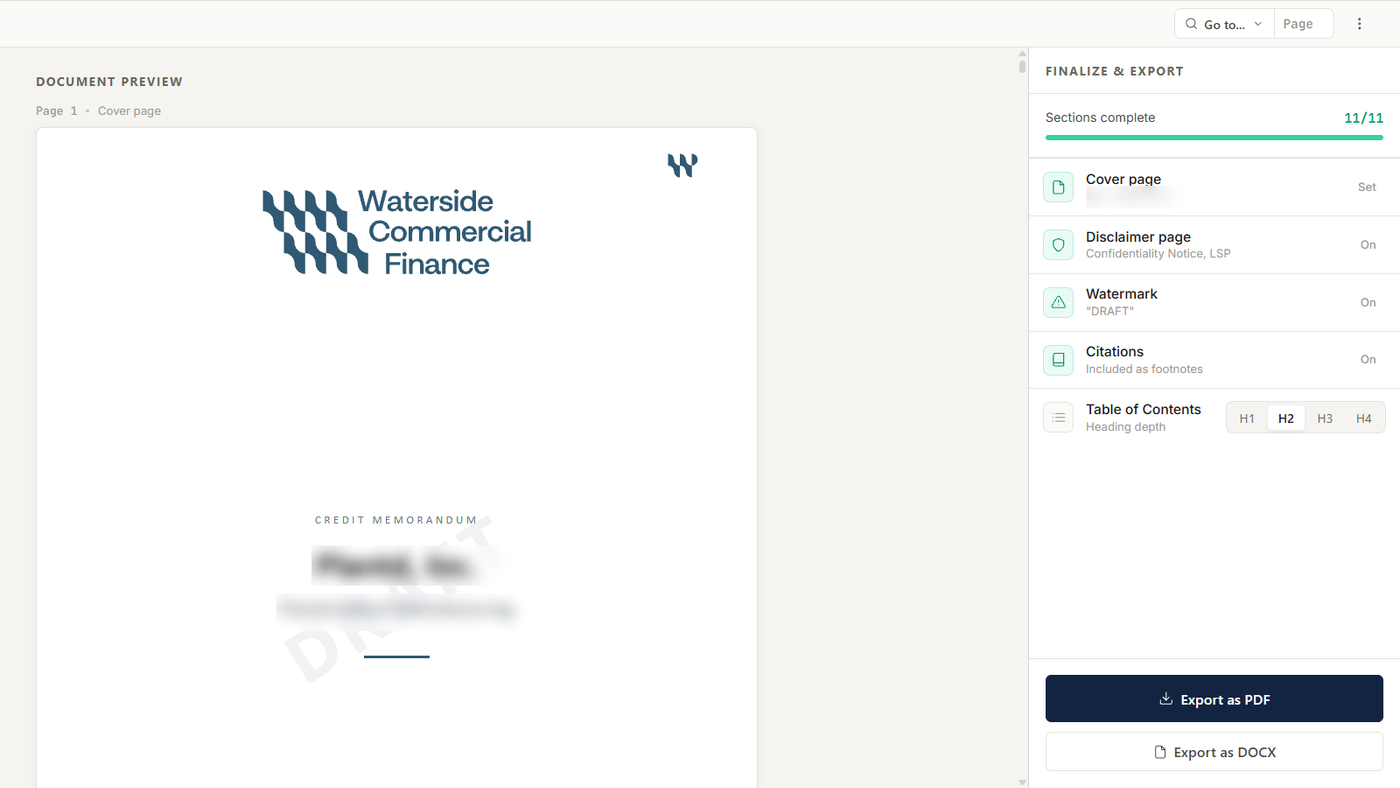
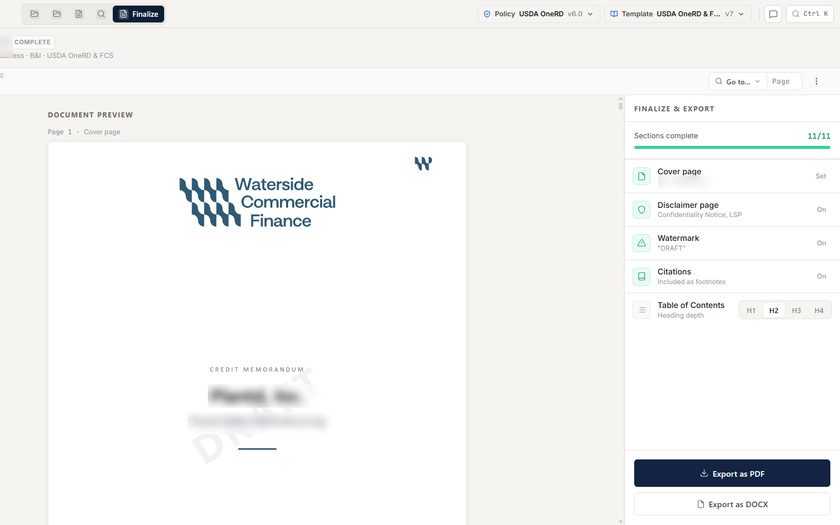
Completed sections become a controlled document with cover, disclaimer, watermark, citations, table of contents, and governed PDF or DOCX export.
§ Fit
Conventional, private credit, government-guaranteed, or specialty: each program configures its own evidence, policy, analysis, reviewers, and outputs without rebuilding the platform.
Section-level routing by program, analytical intent, evidence need, and reviewer role
Configurable analyst and supervisor review patterns for each credit program
Tenant credit policy support for thresholds, covenants, scorecards, exceptions, overlays, and risk weights
Optional regulatory and program-rule context, with dated source material and citations preserved
Accepted facts, source files, tables, prior decisions, and analyst notes assembled for generation
Multiple memo and deliverable templates under one borrower file
Generation receipts preserving the evidence package, policy, model, proposal, and human action
Risk decisions carry into the memo instead of being rediscovered or overridden during generation
§ Path
The analyst chooses the section, evidence set, instructions, and review mode before generation starts.
CORE resolves the analyst pair, credit policy context, regulatory context, evidence, prior sections, and section mandate.
The generation engine drafts from scoped evidence, policy rules, and cited regulations. Large evidence packs are planned and chunked instead of silently dropping files.
The analyst accepts, edits, or rejects the proposal. Supervisor review can then pressure-test the memo across sections.
§ In Depth
Generic AI writing tools treat the memo as prose to be produced. Credit teams know better: the memo is the durable record of an underwriting decision, and it has to survive committee questions, investor diligence, and examination years later. That is why CORE Credit Memos drafts from the approved underwriting and risk state — confirmed spreads, bound policy results, resolved risk decisions — rather than rediscovering or recalculating around what the analyst already decided.
The model proposes memo language. The analyst accepts, edits, or rejects it. That boundary is structural, not a checkbox.
There is no fixed memo in CORE. Each program defines its own memo templates — sections, per-section analytical intents, regulatory domain coverage, mandates, and output structure — versioned and snapshotted when a project memo is created. Headings are individually locked or flexible, so the analyst decides where model judgment is permitted, heading by heading.
A repayment section, a collateral section, and an eligibility section are not drafted by one undifferentiated AI call: each section resolves its own evidence package, policy context, regulatory context, and reviewer path before a sentence is proposed.
Every generated claim operates under cite-or-decline controls: the draft is grounded in accepted facts, source documents, tenant credit policy, and dated regulatory material, with citations preserved. Generation receipts record the routing, inputs, model, prompt package, output, and the human decision — so the work can be replayed when someone asks how a conclusion was reached.
Memo drafting is the last step of a governed chain, not a shortcut around it: collected documents become evidence, evidence becomes confirmed spreads, spreads meet the credit box in underwriting, risk work ends in memo decisions, and the memo inherits those decisions.
§ Next Step
We will show how CORE routes it, grounds it, reviews it, and keeps the decision trail intact.