01
Loan Programs
Loan Programs are the decision surface. Each one shows its Base Package, Memo Template, Underwriting Policy, and, when applicable, Governing Regulations before release into production.
CONFIGURATION MAPLoan Program configuration
§ Platform - Program Studio
Program Studio turns a lender's collection, credit policy, and memo standards into deployable Loan Programs. Each program binds the defaults its projects should inherit, while CORE supplies the configurable underwriting engine beneath them. Even the memo is a configuration.
A Loan Program carries an active Base Package, Memo Template, Underwriting Policy, and, when applicable, a Governing Regulations source set. New projects inherit that governed starting point without hardcoding the platform around a product or capital source.
ONE ENGINE - GOVERNMENT-GUARANTEED, FARM CREDIT, CDFI, AND PRIVATE-CREDIT PROGRAMS§ Program Studio Surfaces
Loan Programs are the decision surface. Each one shows its Base Package, Memo Template, Underwriting Policy, and, when applicable, Governing Regulations before release into production.
Reusable Collection Items are organized in the library and selected into packages. Each Loan Program has one active Base Package; optional global Add-on Packages add project-specific requirements during setup or release.
Metrics, covenants, scorecard factors, thresholds, and risk treatment are assembled into governed policy versions. Published versions are immutable; programs bind defaults and deals retain replayable snapshots.
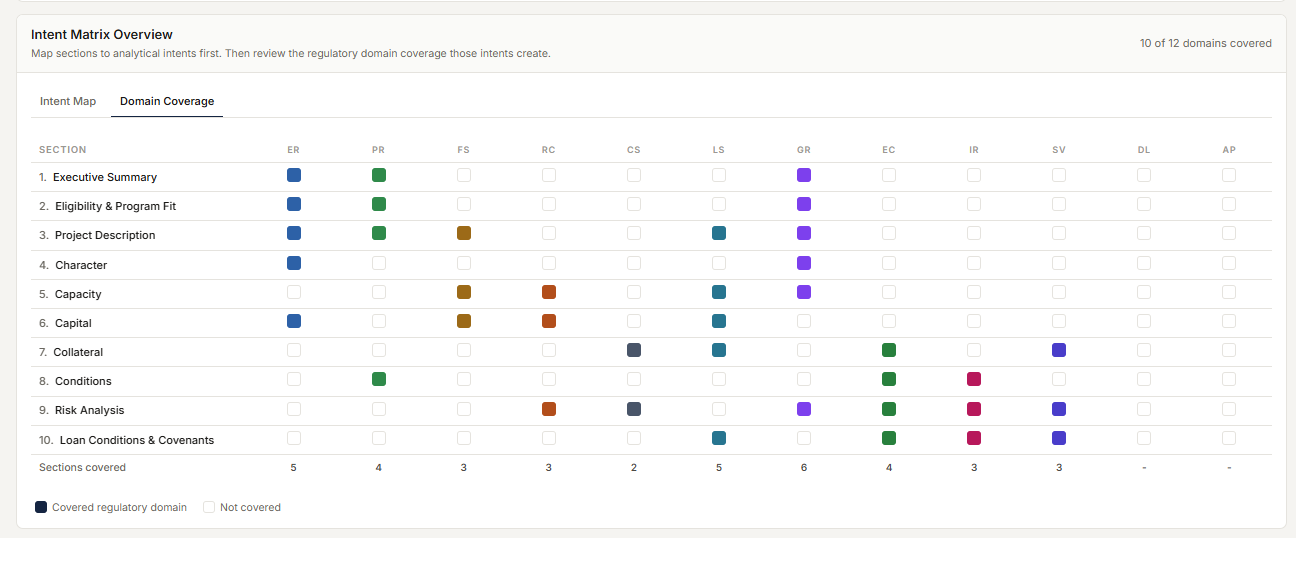
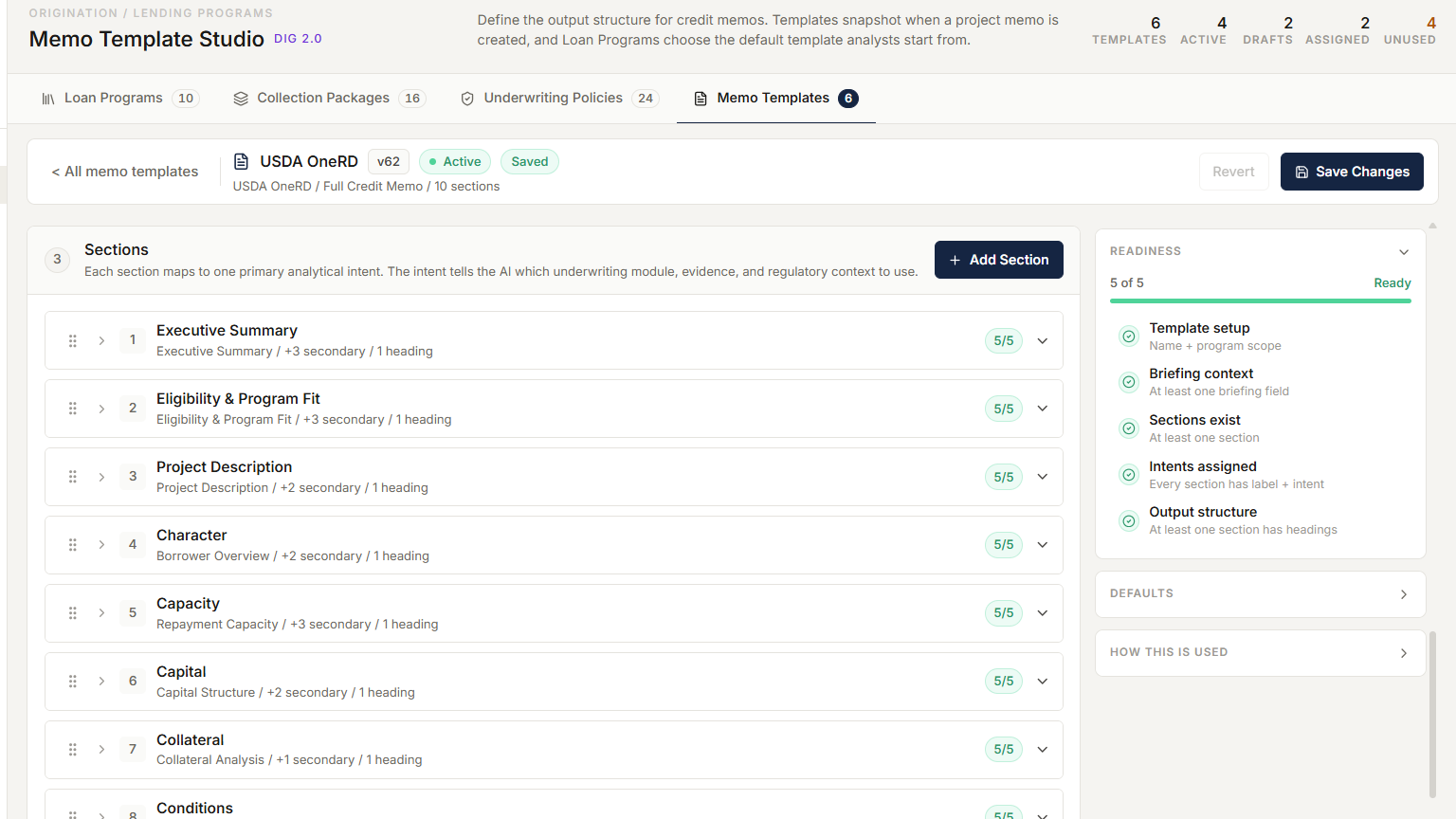
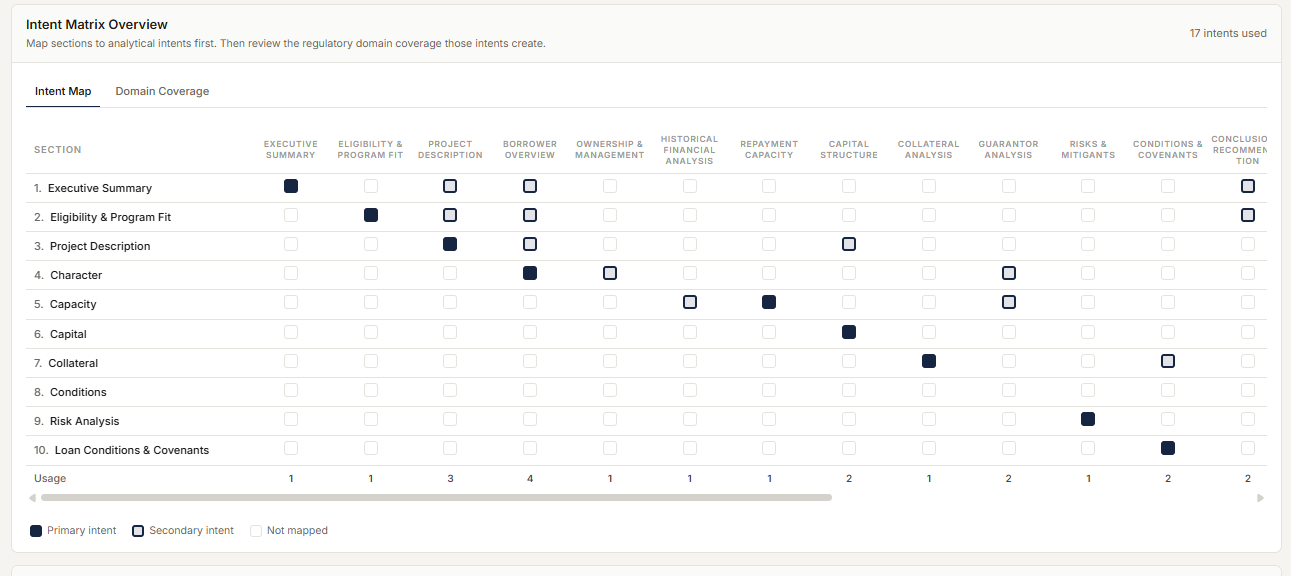
Templates define sections, analytical intents, regulatory coverage, mandates, and output structure. Locked and flexible H1-H4 rules control which headings stay fixed and where the template may adapt.
§ Product Surface
§ Fit
Program Studio is the configuration layer behind the lifecycle, but not every studio is sold the same way.
CORE Workflow includes Loan Programs and Collection Packages for file, portal, collection, and workflow configuration
CORE Underwriting includes Underwriting Policies, credit-box configuration, COREView, and the evidence-to-judgment workspace
CORE Credit Memos adds program-specific memo analysis, Memo Templates, and human-in-the-loop AI support
Published versions are immutable; deals bind a snapshot that can be replayed later
Policy can be switched mid-deal when the lender or capital source changes, with the new snapshot preserved
§ Path
Credit experts configure the Base Package, memo template, published policy, and applicable governing sources from controlled catalogs and libraries.
The Loan Program records the active package, memo and policy defaults, and any applicable Governing Regulations work should inherit.
Projects created under the program inherit the configuration; workflows release in stages.
Published policy and template changes create new versions. Existing deals retain the snapshots they were decided under.
§ In Depth
In legacy platforms, supporting a new loan program means a vendor engagement: requirements, custom development, quarters of waiting. The result is that lenders run the programs their software shipped with, not the programs their market wants. Program Studio inverts that: collection packages, underwriting policies, and memo templates are configuration surfaces that credit experts assemble in weeks.
Loan Programs bind the pieces together; Collection Packages define what must be gathered, entity by entity; Underwriting Policies move from reusable catalogs through editable drafts to immutable published versions; Memo Templates define the output structure, section by section. A deal underwrites against a snapshot of the published configuration — so the configuration that governed a decision is always recoverable, exactly as it stood.
Government-guaranteed programs, conventional bridge lending, private credit strategies, and specialty programs run on the same engine because their differences — documents, policies, memo structure, regulatory context — live in configuration, not code. Waterside's own operating configurations include SBA, USDA, and a conventional bridge program: the proof that the engine is not welded to one program family.
§ Next Step
Your credit process is something you can open and read, not something compiled into someone else's software.