Eligibility is section-specific
Borrower type, project use, rural location, ownership, affiliate facts, and program purpose need evidence before memo language.
§ Who We Serve - USDA Program Lenders
USDA program lending is not one workflow. B&I, REAP, Community Facilities, and rural credit files all carry eligibility, environmental, collateral, borrower, and repayment evidence that has to survive review.
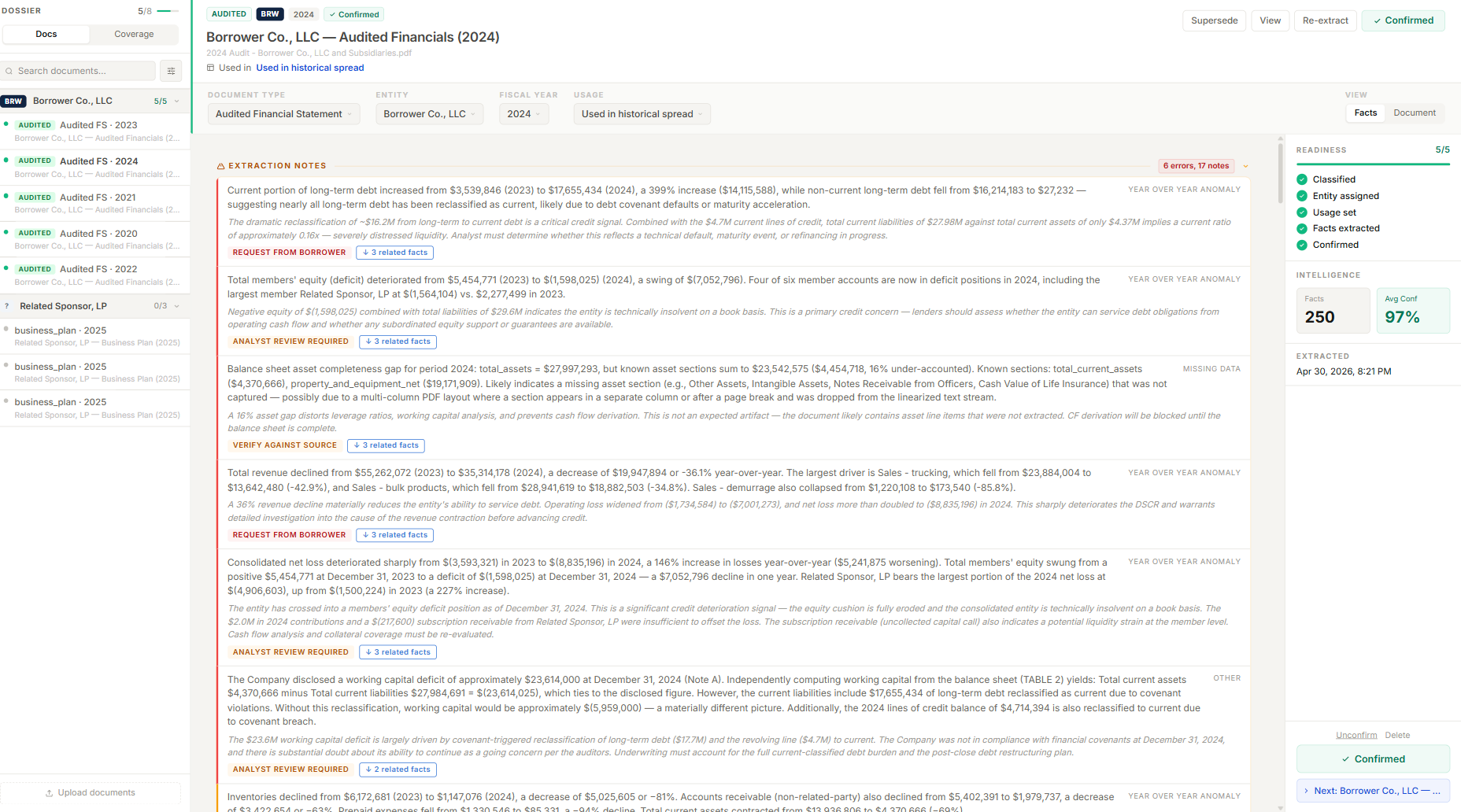
CORE was built in live program-credit operations, with document intake, fact extraction, regulatory chunks, credit spreading, program-routed memo support, and audit history designed around real underwriting pressure. B&I, CF, and REAP each run as a configured program - package, policy, memo template, citation library - not a custom build.
Extraction notes with related facts and analyst review§ USDA Program Credit
Borrower type, project use, rural location, ownership, affiliate facts, and program purpose need evidence before memo language.
USDA rules, Federal Register updates, NEPA requirements, and program guidance should resolve to dated source chunks.
Audits, tax returns, business plans, environmental reports, appraisals, insurance, and borrower forms become accepted facts, not loose attachments.
Spreads, DSCR, projections, covenants, and anomalies should trace back to source financials and analyst adjustments.
Eligibility, repayment, collateral, project description, and risk sections should summon the right policy, regulatory, analyst, and supervisor context.
Every accepted fact, overridden recommendation, generated output, and analyst decision stays tied to the loan file.
§ Fit
The strongest fit is repeated USDA program work where the same document and policy pain appears deal after deal.
B&I, REAP, Community Facilities, and adjacent rural program file organization
Required document collection, status control, and workflow release
Borrower, guarantor, affiliate, ownership, and project-use fact extraction
Financial spreading, anomaly detection, DSCR support, and source-linked adjustments
Dated regulatory chunks for eligibility, environmental, collateral, repayment, and servicing claims
Program-routed memo support with analyst-owned decisions and audit export
§ Path
Start with B&I, REAP, CF, or another repeated USDA flow where documents and rule pressure are visible.
Align required docs, entity types, regulatory domains, source tables, memo sections, and review checkpoints.
Use active or anonymized files to validate extraction, spreading, regulatory retrieval, and memo behavior.
Keep analyst acceptance, supervisor review, and audit export explicit before expanding the workflow.
§ In Depth
A B&I credit is routinely a project-finance exercise: scenario projections, a capital stack with the guaranteed portion modeled correctly, construction and feedstock logic, rural operating context. CORE's underwriting workspace carries that work natively rather than flattening it into a small-business template.
Every guaranteed file has two reviewers: the lender's committee and the agency. The file must anticipate agency questions in writing — eligibility support, program-rule references, cited industry analysis — which is why CORE integrates the governing regulations as a dated, citable source library the analysis can draw from.
OneRD-era rule changes, program updates, and policy revisions land as configuration updates in Program Studio — collection packages, policies, memo templates — not as process rewrites. The program a file was underwritten under remains recoverable, exactly as it stood.
§ Next Step
We will walk through the source documents, rule context, memo path, and replay trail on a real program-credit file.