Bridge
Short-fuse deals still deserve a controlled record: collection, spreads, approval rationale, conditions, and exit evidence that survive diligence.
§ Who We Serve · Private Credit
Bridge, ABL, and direct-lending teams run distinct credit boxes. CORE deploys each strategy as a configured program, then keeps borrower evidence, spreads, policy decisions, memo work, and audit history ready for credit committee, LP, and capital-partner diligence.
A private credit strategy is a loan program in CORE: document list, underwriting policy, risk treatment, memo template, and citation library. The configuration is versioned, and it can be switched when the lender, fund, or capital source changes.
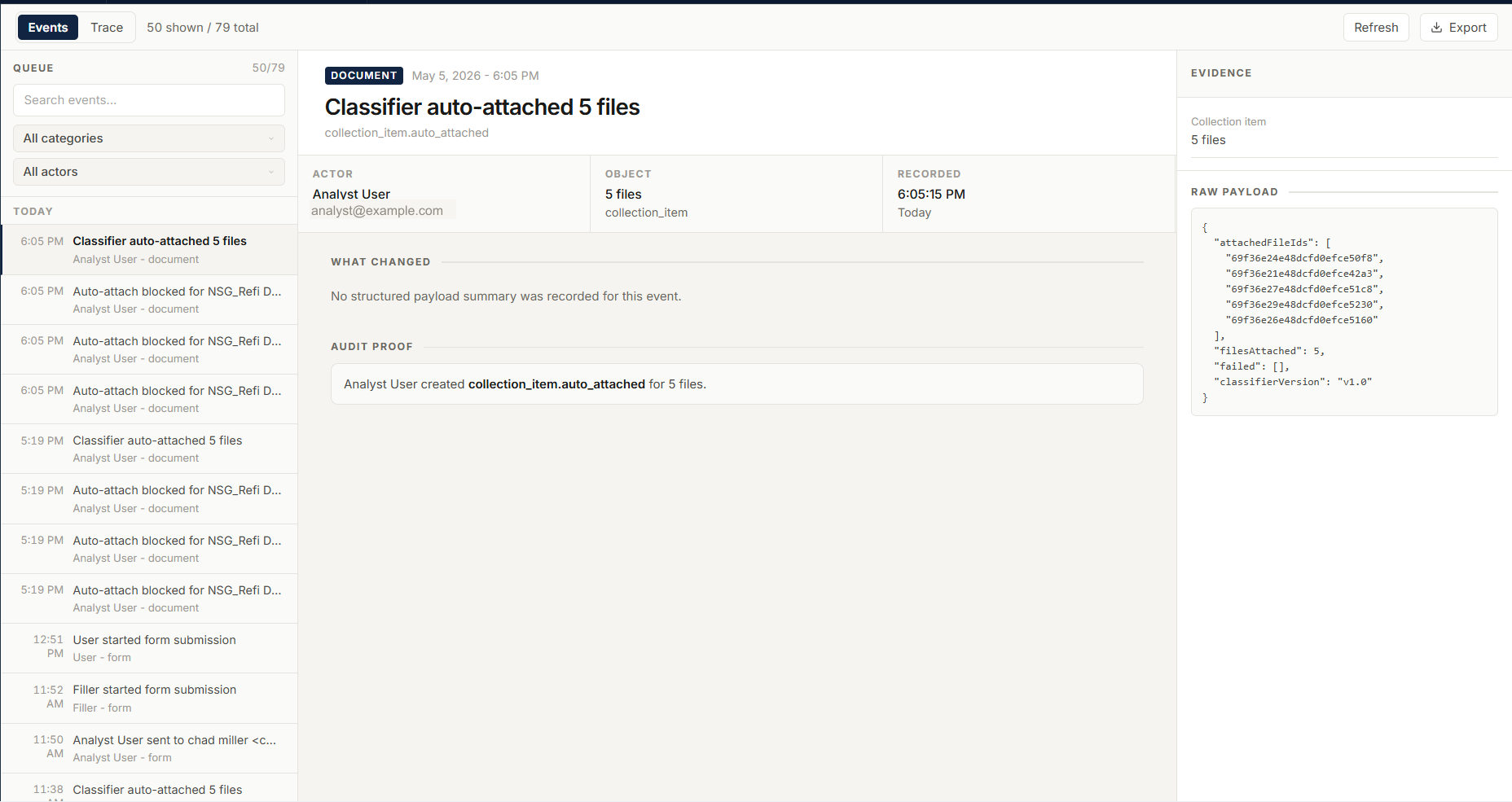
Diligence-ready borrower file, redacted§ Private Credit
Short-fuse deals still deserve a controlled record: collection, spreads, approval rationale, conditions, and exit evidence that survive diligence.
Collateral evidence, borrowing-base context, lien support, and source-linked financials stay attached to the borrower record.
Fund-specific underwriting lives as your own policy, scorecard, covenant set, and memo template - ready when an LP asks to see the work.
Annual reviews, waivers, amendments, ownership support, and capital-stack diligence inherit the origination record instead of becoming a separate scramble.
A source-cited file lets a bank partner, fund, or co-lender review the same facts, decisions, and exceptions the credit team used.
Strategy-specific document lists, policies, memos, and risk decisions are configured surfaces, not code forks.
§ Fit
The fit is a shop that answers to LPs, credit committees, banks, and capital partners with real files, not just pipeline status.
Bridge, ABL, direct-lending, or fund-specific programs deployed as configurations
Borrower files with source-cited facts, spreads, collateral, and policy decisions
Diligence-ready packages for LPs, capital partners, banks, and co-lenders
Credit-committee memo work tied to source evidence and analyst decisions
Post-close obligations, reviews, waivers, amendments, ownership support, and capital-stack diligence on the same record
§ Path
Map the strategy's document list, credit box, risk treatment, and memo shape into a program configuration.
Put one live or dead deal through collection, document intelligence, spreading, underwriting, and memo support.
Walk the evidence trail the way an investment committee, LP, bank partner, or co-lender would.
Add the next strategy as a configuration once the first file proves the workflow.
§ In Depth
Private credit's accountability audience is LPs, investors, and credit committees rather than examiners — but the standard of proof is converging: allocators increasingly run operational diligence that looks like an exam. The fund that can show sourced analysis, recorded decisions, and replayable history wins that review without building a bank-scale back office to do it.
Bridge, ABL, and direct-lending strategies are different credit boxes with different documents, policies, and memo formats. Each deploys in CORE as a configured program — so a multi-strategy shop runs one platform, and a new strategy is a configuration exercise rather than a tooling project.
Private credit's edge is pace, and documentation usually pays for it. CORE's design premise is that the defensible record should be a byproduct of moving fast — evidence attaches as it arrives, decisions record as they are made — so speed and the file stop being a trade.
§ Next Step
The fastest way to see whether CORE fits a private credit shop is a file you already know the ending to.