Pick the deals
One or two closed or dead deals with a typical document package - tax returns, financials, narratives, appraisals.
§ Dead-Deal Pilot
The fastest way to evaluate CORE is not a feature tour. Pick one or two closed or dead deals, run the borrower package through the platform, and measure the result: time saved, gaps found, and every number traced to its source.
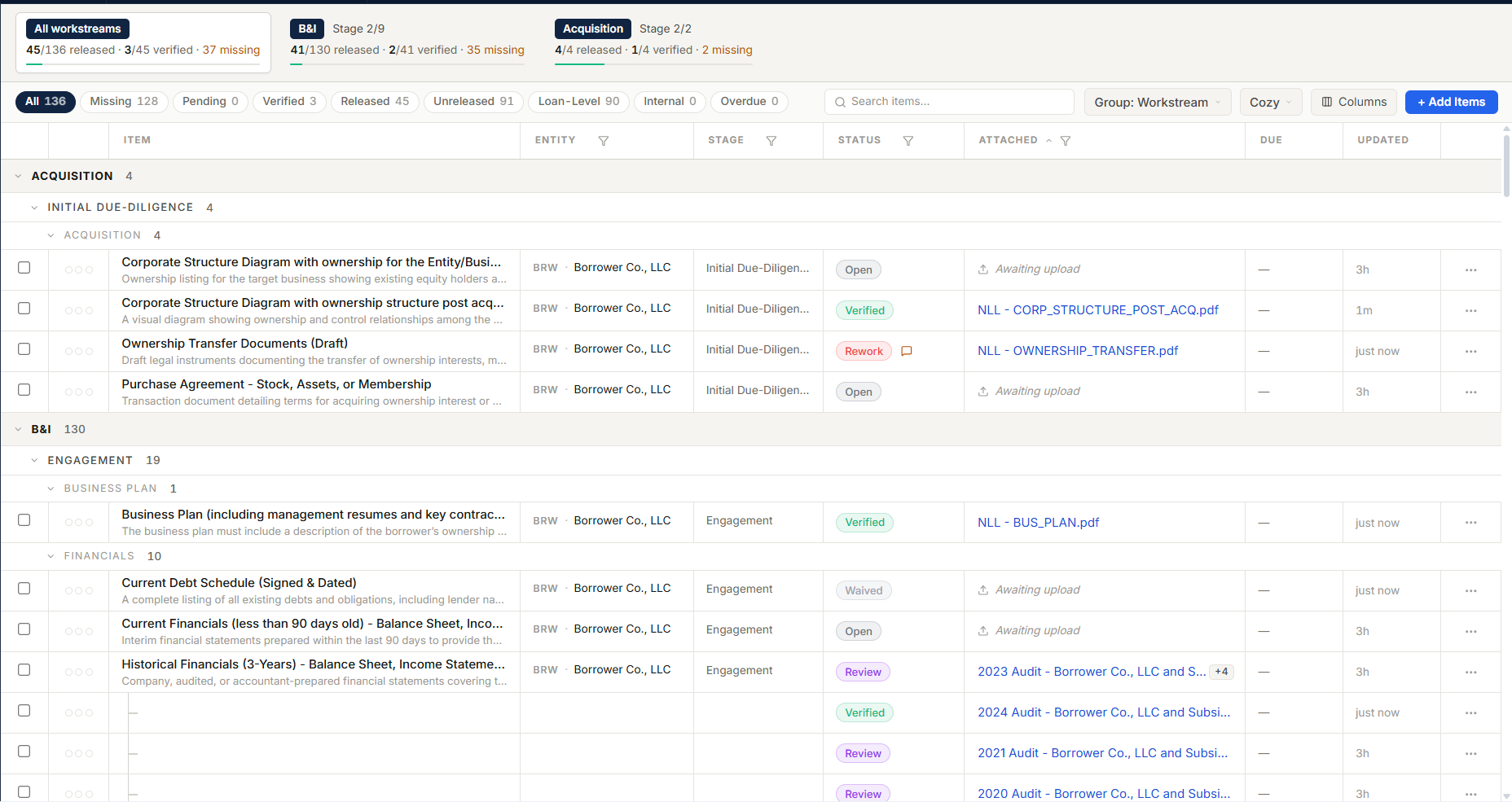
You already know how the deal ended. That is what makes it the right test: you can judge whether CORE's extraction, spreads, gap list, and memo support match what your team found the slow way - or catch what it missed.
Real product surface, redacted§ Pilot Design
One or two closed or dead deals with a typical document package - tax returns, financials, narratives, appraisals.
Documents are classified, facts extracted with source spans, financials spread, gaps surfaced, and memo sections drafted under cite-or-decline.
Compare time-to-memo, gaps found, and evidence traceability against what your team originally produced.
§ Fit
The pilot ends with numbers, not impressions.
Hours from document package to reviewable spreads and memo draft
Document gaps and missing-item requests CORE surfaces
Facts extracted with source citations an examiner could replay
Spread accuracy against your original workpapers
Memo claims cited to source - and claims declined when no source exists
§ Path
Pilot files are handled under NDA on request, kept private to your workspace, and deleted at your direction.
30 minutes. Pick the deals, agree what to measure, and cover data handling.
You share the package through a controlled channel. Files stay private to your pilot workspace.
Intake, extraction, spreading, gap surfacing, and memo support on the real package.
Walk the output side by side with the original file and decide next steps on evidence.
§ Next Step
Most teams pick the file that hurt the most. That is usually the right choice.