For CDCs · Farm Credit · USDA · HUD · EB-5 · C-PACE · CDFI · Private Credit
The configurable underwriting engine built inside an active credit operator.
One borrower file from application through closing, servicing, and review — and a new loan program deployed as a configuration, not a build.
Source-cited AIReview- and examiner-readyLive in 60 days
- $1.5B+
- Active program-credit deals
- 50+
- Deals currently underwriting
- 60 days
- Typical live window
§ Product proof · Source to audit
From source evidence togoverned credit judgment.
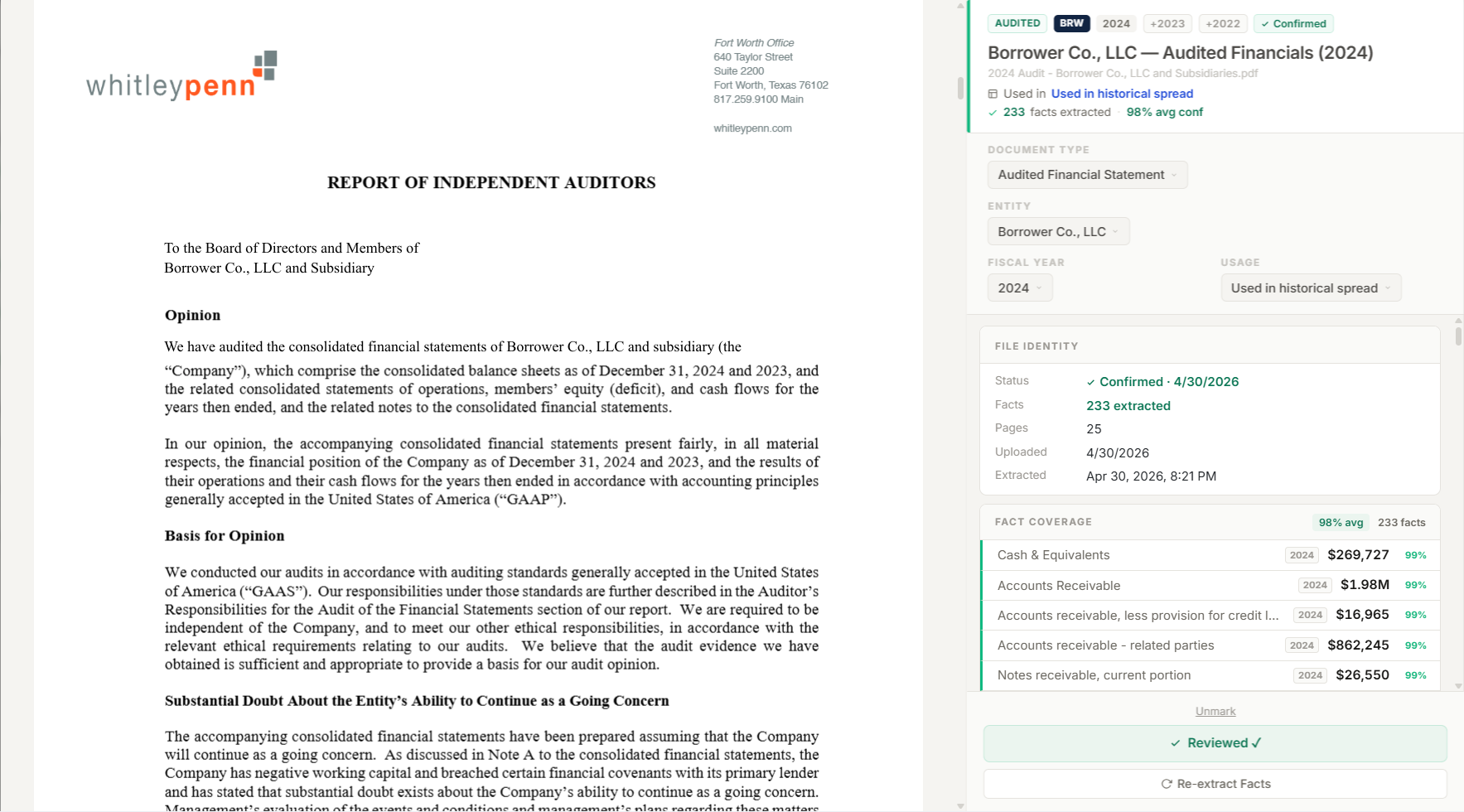
Real, redacted product surfaces. The source document, extracted fact, analyst decision, and audit event stay in the same borrower file.
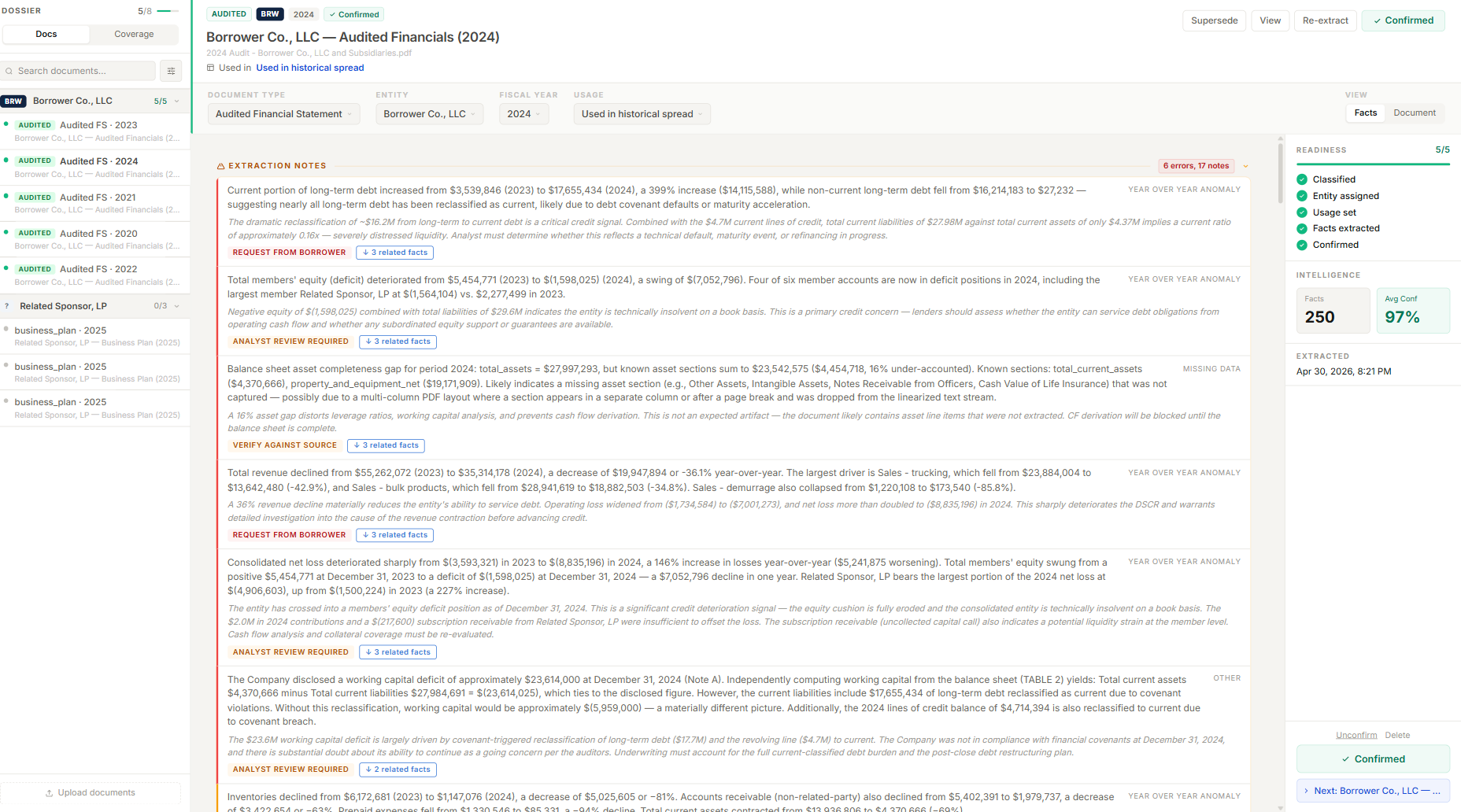
The model flags what a credit officer would investigate.
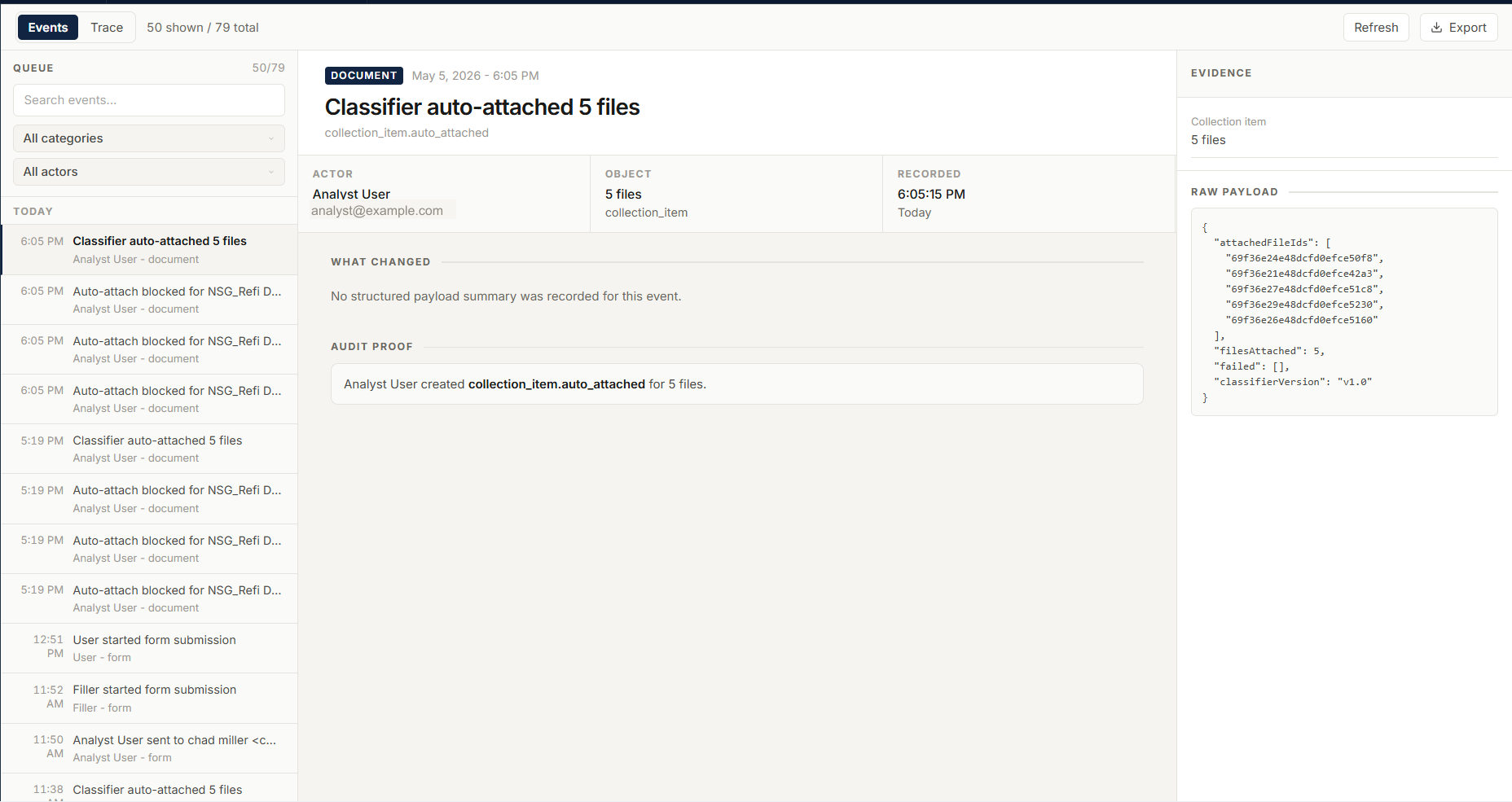
Every decision lands in the event log with evidence attached.
MORE CAPTURED SURFACESINTAKE INBOXSPREADING + REVIEW DRAWERDEAL-FILE SEARCHCOVERAGE MAPView the platform
§ Programs · Supported
Built for the lenders other vendors call “edge cases.”
01
CDC
SBA 504
02
Farm Credit
FCS Title I & III
03
USDA
B&I · CF · REAP · Rural
04
HUD
232 · 223(f) · 221(d)(4)
05
EB-5
Regional Centers
06
C-PACE
Energy · Water · Resil.
07
CDFI
Cert. CDFI lenders
08
Private Credit
Bridge · ABL · Direct
§ The Engine · Program Studio
One underwriting engine.
Every program is a configuration.
Plenty of software moves the file. CORE underwrites it — then carries the decision through closing, servicing, committee review, diligence, and examination without rebuilding the platform around each program.
FIGURE · CORE ARCHITECTUREEvery program family · one engine · one audit trail
SBA 504
USDA B&I
HUD 232
EB-5
C-PACE
CDFI
Farm Credit
Private Credit
Every program family. One engine. One audit trail.
Your document list.
Collection packages — base plus add-ons — not a hardcoded checklist.
Your credit box.
Underwriting policies built from your own metric, covenant, and scorecard catalogs — versioned, assigned per program, switchable mid-deal when the lender or capital source changes.
Your memo.
Templates define sections, intents, and mandates. There is no fixed memo.
Your industry research.
COREView reports generate from configurable profiles — the same discipline as the memos.
PIPELINE · ROLLING WINDOWSOURCE · CORE PROJECT ACTIVITY
$1.5B+across50+active commercial-credit deals currently underwriting on CORE
C-PACE energy + resiliencyUSDA B&I + REAPEB-5 regional center capitalHUD bridge-to-perm housingBRIDGE interim capital
§ Who We Serve
The segments we serve in depth. One connected decision trail.
One engine, configured by program — packaging, decision, and replay surfaces tuned to each program’s eligibility, review posture, and capital path.
CDCs
504 packaging, eligibility, and credit memo — built against real SBA examination findings.
View CDC buildFarm Credit
Cooperative lending against patronage, captive book, and FCA examination.
View Farm Credit buildUSDA
B&I, Community Facilities, REAP — rural mission, federal scrutiny.
View USDA buildC-PACE
Energy, water, resiliency capital — long-term assessment-backed credit.
View C-PACE buildCDFI
Mission lending with cert-level reporting and donor-defensible files.
View CDFI buildPrivate Lenders
Bridge, ABL, and direct lending — bespoke programs as configurations, files ready for LP and capital-partner diligence.
View Private Credit build§ Platform
Six products on one borrower file.
Find program-fit borrowers, manage CRM relationships and pipeline opportunities, convert qualified deals into borrower projects, then underwrite, document, close, and service.
01Find
CORE Lead Discovery
Program-fit borrowers
Find borrower opportunities that fit your programs - human-screened before they touch the pipeline.02ManageCORE Workflow
Manage the relationship + deal
Manage CRM relationships, pipeline opportunities, borrower files, collection, routing, and audit history.Most teams land here03UnderwriteCORE Underwriting
Underwrite the deal
Underwrite the deal: Table Evidence, spreads, pro forma, capital, coverage, risk, and COREView.Most teams land here04DocumentCORE Credit Memos
Document the decision
Program-specific credit memo analysis - grounded in evidence, policy, risk, and analyst review.Human-in-the-loop05CloseCORE Closing
Close with control
Close with control: approval snapshot, conditions, funding reconciliation, blockers, and human certification.06ServiceCORE Servicing
Service the portfolio
Service the portfolio: boarding, obligations, ledger, payment controls, reviews, and action packages.Six products on one borrower file. Most teams begin with Workflow or Underwriting, then add products upstream or downstream as the operation is ready.
Configured by Program Studio
A loan program is a configuration, not a build.
Collection packages, underwriting policies, and memo templates stay versioned by program.
§ AI · Built for examination
AI in CORE is judged by its citations, not its prose.
These controls answer the question credit teams get after the memo is written: where did this claim come from?
- Cite-or-decline. If the model cannot ground a claim in a file, rule, or accepted fact, it declines to write it.
- Analyst-owned decisions. The model proposes; the analyst accepts, edits, or rejects. The human decision is logged separately.
- Audit-ready snapshots. Model, inputs, output, and overrides are frozen against the loan file — replayable after the decision.
- The receipt. The analyst assembles the evidence; the receipt proves what the model saw.
- Organized like a credit department. 23 personas across four divisions — underwriting, credit policy, program policy, operations — route section work to analyst-and-supervisor pairs per program. Every agent action is timestamped, actor-named, and queryable.
decisionFILE PINNED · Tax Return — 2023
modelclaude-sonnet-4-6 · 2026-03-19
skillcredit-analysis-spreading@v3.2.1
candidatesMercerMfg_2023_1120S.pdf · conf 0.94 · PINNED
MercerMfg_2023_K1.pdf · conf 0.81
MercerMfg_2023_K1.pdf · conf 0.81
analystR. Tabori · approved · 14:22:11 EDT
snapshot3f9c-b21e-44a7-c019
§ Origin · Built in production
Built inside a working commercial-credit shop. Against real examination findings. While the loans were closing.
Every major surface came from pressure inside the work: analysts assembling files, supervisors checking memos, lenders answering examination questions, borrowers waiting on decisions.
SBA, USDA, and conventional bridge are the configurations Waterside runs on its own deals — the product is used on the builder’s book before it is sold.
§ COREView · Live library
Public industry credit intelligence.
§ Request demo
Pick the path that matches your program.
Demos are 30 minutes — real deal artifacts, source citations, and the audit trail behind a credit decision. Bring your hardest credit-review question.
- CDCI run a CDC
- FCSI work at Farm Credit
- USDAI originate USDA loans
- PRIVI run a private credit shop
- PILOTSend us a dead deal — we'll run it through CORE
Source-cited AI · Human-controlled decisions · Review-ready replay · Live in 60 days